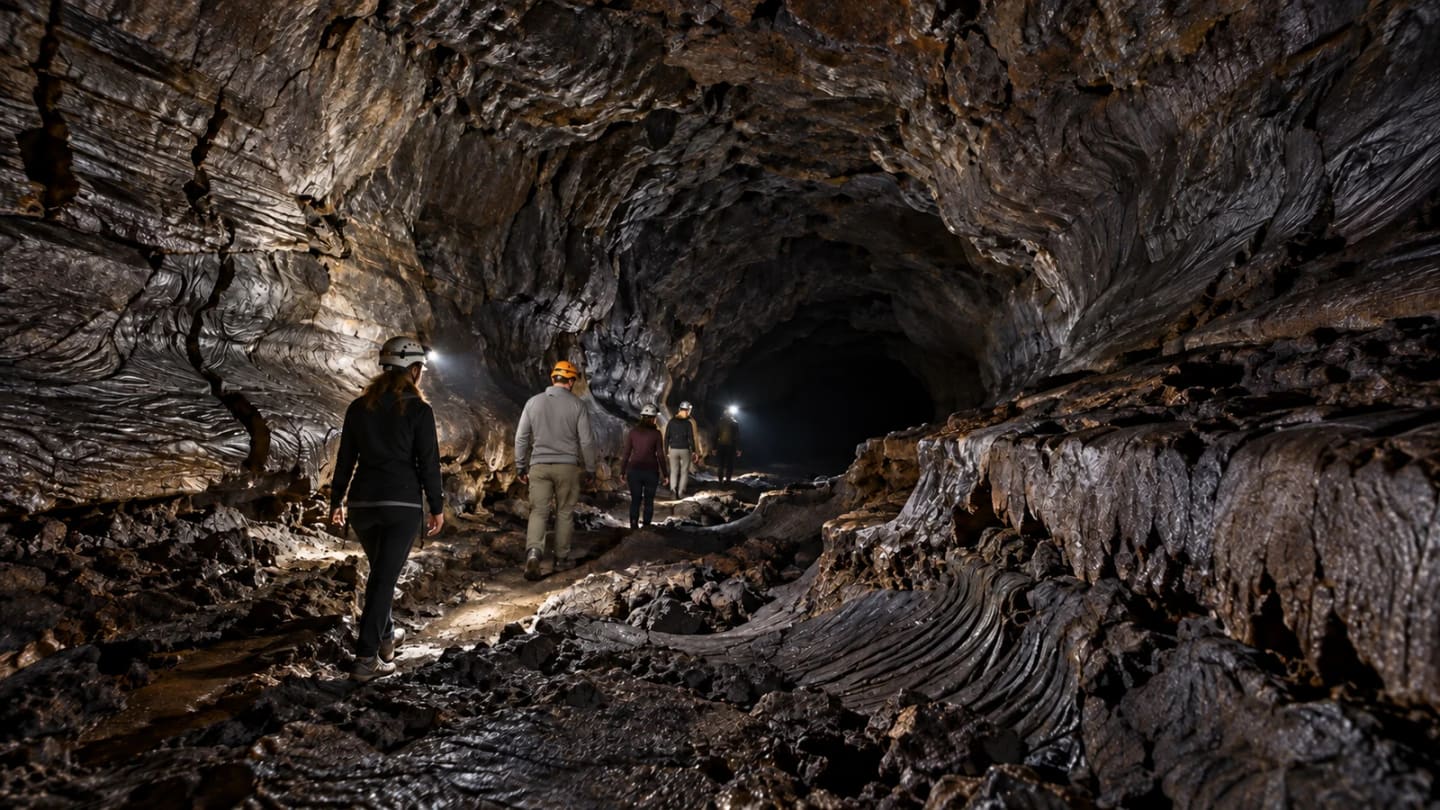
Cueva del Viento is a guided lava-tube visit above Icod de los Vinos, with advance online booking, groups of up to 15 and a 2½-hour programme. I’d choose it for volcanic geology rather than a strenuous caving adventure. The catch is uneven walking, stairs and darkness: check the access rules before buying tickets.
Written by Mihail Schwarz. Practical information checked on 30 September 2026.
How Pico Viejo created an underground lava network
Think of a lava tube as a channel that acquired a roof while its contents were still moving. The outside of a basalt flow cools and hardens on contact with the air. Beneath that crust, insulated lava can continue downhill. When the supply falls and the channel drains, a hollow passage remains. You are looking at the former route of molten rock.
Cueva del Viento formed around 27,000 years ago from flows associated with the first eruptive phase of Pico Viejo, the volcano beside Teide. Its passages form a network with three overlapping levels. This is the connection I’d keep in mind when combining the cave with a visit to Teide: above ground you see the volcanic landscape; underground you see how lava moved through it.
The name means Cave of the Wind, referring to draughts inside the system. You’ll also see it called the Wind Cave Tenerife or Cueva del Viento–Sobrado. These names concern the same cave network, but a visitor ticket only grants access to the authorised guided section. It does not allow you to choose another entrance or explore independently.
Published measurements need some care. The operator’s homepage gives 18 kilometres of mapped passages, while Museos de Tenerife has described 18.5 kilometres. Those figures concern the wider network, including galleries outside the public itinerary. They are not the length of your walk, and the tour does not traverse all three levels.
The operator advertises it as the world’s fifth-longest lava tube and Europe’s largest. Other tourism descriptions use different rankings and older measurements. I’d treat the worldwide placing as the operator’s description rather than a permanently verified league table. The reason to book is the geology, not whether another survey changes its position by one place.
For a first visit, that distinction matters more than memorising numbers. A modest stretch of passage can show how a flow changed height, cooled and left its mark. You don’t need kilometres underground to understand the process, provided you give the guide time to explain what looks at first like an ordinary rough wall.
What the guided tour involves
The programme starts at the Centro de Visitantes, where introductory displays establish the volcanic setting. The operator then describes a short transfer in its vehicle to the walking route. Outside, the approach crosses lava terrain and follows an old camino real, a traditional linking path, towards the entrance. This is a countryside walk as well as a cave visit.
The current operator specifies a total duration of two and a half hours and medium difficulty. That includes the introduction, transfer and outdoor walking. Don’t assume the entire time is spent underground. An older museum account describes a public section of roughly 200 metres; the exact route and timing for your visit should come from your guide.
Groups are limited to 15 people. Choose a language you understand when booking: following explanations and safety instructions is part of taking part, not an optional extra. If you are arranging tickets for friends, check everyone’s language needs before paying. A convenient start time is a poor choice if someone cannot follow the briefing.
A helmet with an electric lamp provides light inside the cave, which has no fixed artificial illumination. That makes the guide’s explanation especially useful: the features you notice depend on where the light falls. Stay together, let others see the formation being discussed and keep your attention on your footing when moving again.
I’d allow additional time around the advertised programme for finding the centre, parking and getting ready. A lunch reservation immediately after the nominal finish creates unnecessary pressure. Make the cave your fixed appointment, then let the rest of the day follow it. This also gives you space to enjoy the outdoor approach instead of treating it as a delay.
The format suits someone curious enough to listen and look closely. If your idea of speleology involves ropes, squeezing through unexplored passages or choosing your own route, this interpretation tour serves a different purpose. There is plenty to learn without those activities, but it helps to arrive with the right expectation.
Lava drops, terraces and life without daylight
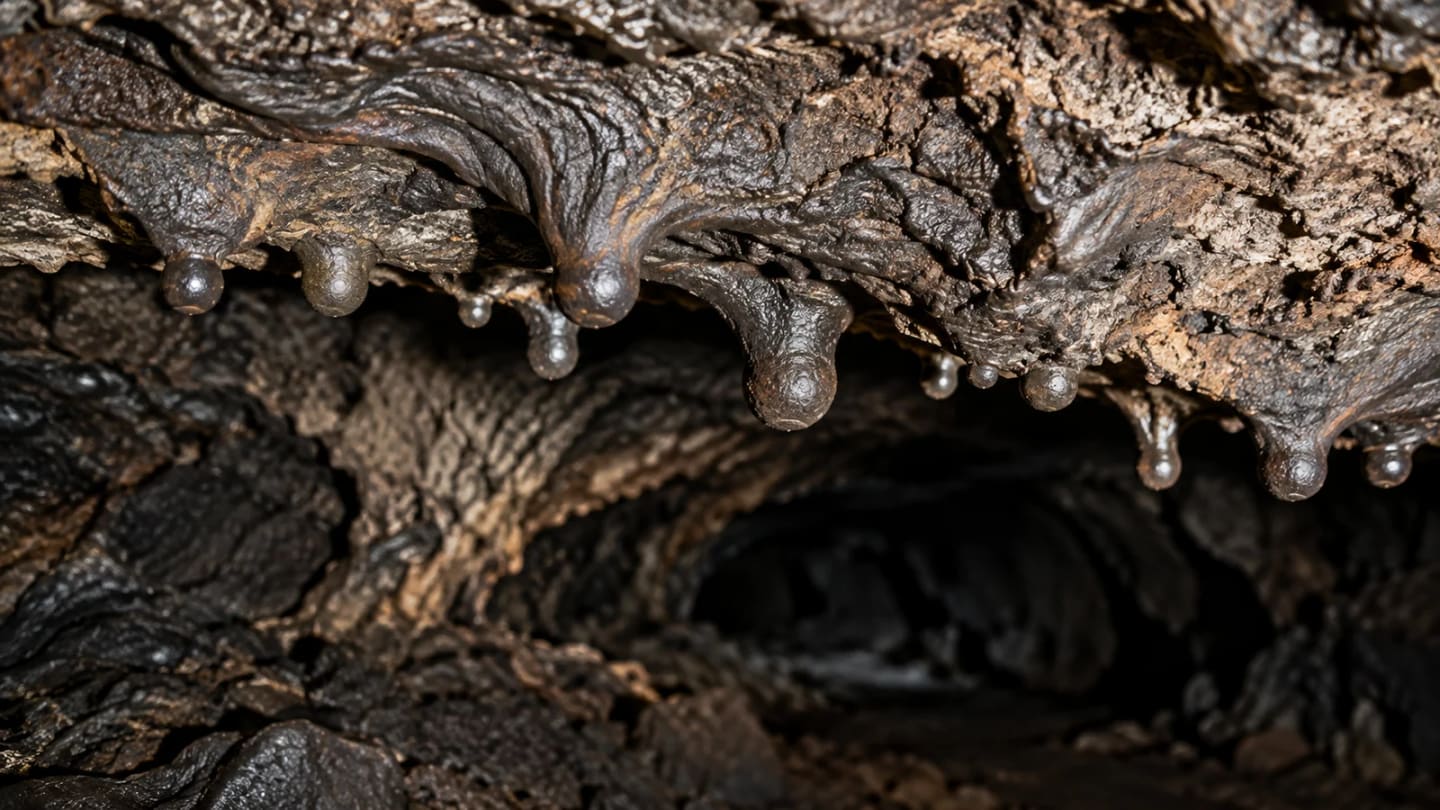
The shapes record flowing lava rather than an empty tunnel carved afterwards. Side terraces mark former flow levels; changes in the passage can leave cascades of solidified lava. Small ceiling drips, often called lava stalactites, formed while volcanic material was hot. Their origin differs from the slowly growing mineral stalactites associated with many limestone caves.
The wider system contains more formations than any short public route can show. Treat photographs of another gallery as examples of the network, not a promise that your group will stand in exactly that spot. Ask the guide which shapes are visible in your section. Understanding one terrace properly is more rewarding than collecting names without recognising their meaning.
For photographs, keep expectations modest. Headlamp lighting produces strong shadows, and a phone may struggle to capture the whole passage clearly. I’d favour a few details over trying to reproduce a brightly lit promotional interior. Photography is permitted under the operator’s rules, but keep moving with the group and follow any instructions about where to stop.
The cave also supports animals adapted to permanent darkness, known as troglobites. Museos de Tenerife documents eyeless cockroaches and specialised ground beetles, including Wolltinerfia species. These creatures are part of a fragile underground habitat, not a guaranteed wildlife display. You may learn more about them from interpretation than from spotting an animal yourself.
Species counts have changed between museum publications as research develops, so a single total is less helpful than understanding the habitat. Avoid handling anything, touching formations for a photograph or searching beyond the visitor route. Small animals and their surroundings are easy to overlook when your attention is on a dramatic rock shape.
I’d choose this experience for the combination of scale and detail: a large volcanic system explained through a small authorised section. The darkness makes that detail dependent on careful observation. Allow the guide to direct your attention; wandering away for an apparently better view undermines both the explanation and the conservation rules.
Children, footwear, clothing and claustrophobia
Children under five cannot participate. For older children, eligibility is only the first question. Consider whether they can manage irregular ground, stairs, instructions and an enclosed dark setting without becoming distressed. Before paying, ask the operator about your family’s circumstances and any accompaniment requirements stated in the booking conditions.
Closed sports shoes or hiking boots are mandatory. Choose soles that grip uneven ground; a closed shoe with a smooth fashion sole is not my first choice here. Wear long trousers and bring a warm layer. The operator recommends these for an interior of about 14°C and 80% humidity, rather than the 11°C quoted in some briefs.
You also walk outside. Check the forecast and bring suitable rain protection when needed, rather than assuming the underground portion makes the whole outing weatherproof. Dress for both parts of the route. A light layer you can wear comfortably is more useful than clothing that only suits a sunny resort promenade.
The operator tells people with claustrophobia or mobility problems to refrain from the visit and to contact it with questions. I wouldn’t use a prepaid tour to test whether an enclosed passage feels manageable. Explain any concern before booking, especially if irregular walking or stairs are already difficult. Being able to walk a flat pavement does not establish suitability here.
Backpacks, handbags and shoulder bags are prohibited during the visit. The rules allow a waist bag that is not worn over the shoulders, and a camera around the neck or a mobile phone. Sort out your belongings before arriving; don’t depend on storage arrangements that you have not confirmed. Keep luggage plans separate from the cave appointment.
Eating, taking animals and collecting material are also prohibited. Leave rocks and wildlife alone, stay with the guide and report fatigue promptly. I’d have a meal or snack beforehand, then plan refreshments afterwards. The route is easier to enjoy when everyone understands these practical limits before the briefing begins.
Cueva del Viento Tenerife tickets and booking
Start your Cueva del Viento booking through the official operator website and follow its current ticket link. At the time of checking, the homepage lists €25 for a standard adult, €15 for a Canary Islands resident, €8.50 for children aged 5–12 and €5 for resident children. Confirm categories, required identification and the final amount before payment.
The operator requires advance online purchase and lists card payment only. Check the date, language, number of places and meeting instructions together. Save your confirmation somewhere accessible without a reliable data connection. If booking separately from travel companions, make sure you are all selecting the same session rather than merely the same day.
I’d look two to four weeks ahead when the cave is an important part of a fixed itinerary. That is planning advice, not evidence that every date sells out weeks in advance. The 15-person limit makes availability worth checking early; the live calendar is the only useful answer for your preferred session.
Read the cancellation and amendment conditions displayed during purchase. Don’t assume a change of holiday plans, a delayed journey or choosing the wrong language produces a refund. If a reseller offers a broader excursion, check whether cave admission is explicitly included and whether it has secured places. A northern sightseeing tour is not automatically a Cueva del Viento tour.
Book the cave first, then organise transport and nearby stops. If your preferred session is unavailable, choose another date or a different activity rather than driving up in the hope of an unadvertised exception. I’d keep a town visit as the fallback, which avoids turning a limited-capacity attraction into a wasted day.
Getting to the visitor centre above Icod
The meeting point is Centro de Visitantes Cueva del Viento, Calle Los Piquetes 51, above Icod de los Vinos. Use the centre’s address, not an arbitrary cave entrance found on a map. The vehicle transfer described in the programme happens after meeting the operator; it does not collect you from your hotel.
For parking, follow the parking map linked by the operator. Check the pin before travelling and allow time to walk to the centre. I wouldn’t promise a free space or a particular parking charge without confirmation. If navigation leads you towards a small residential access, check that you are following the official meeting instructions.
Without a car, arrange the final journey to the centre separately from reaching Icod town. Check current bus connections, then establish whether a taxi is needed for the uphill part and how you will return. Give a driver the full address and your required arrival time. Leave room for delays instead of using the tour start as your vehicle arrival target.
Afterwards, choose Icod for a relaxed town stop or continue to Garachico for a coastal contrast. I’d keep this as a northern day and put Teide on another outing if you want time for both landscapes. The Tenerife day-trips guide helps compare combinations before you fill every remaining hour.
Choose your underground or volcanic outing
| Place | Main reason to choose it | Booking and access | My recommendation |
|---|---|---|---|
| Cueva del Viento | A guided explanation of a lava tube from inside | Paid advance booking; uneven terrain and restrictions | Choose for focused geology and a small group |
| Teide | Volcanic scenery above ground | Check the arrangements for your chosen trail or excursion | Give it a separate day when scenery is the priority |
| Garachico | Lava-shaped coast with a town visit | Check sea conditions before considering any bathing | Add after the cave for an outdoor contrast |
Northern excursions
Compare itineraries by their actual stops and pickup points. Check cave admission separately rather than assuming it is included. Browse Tenerife day trips.
Car hire
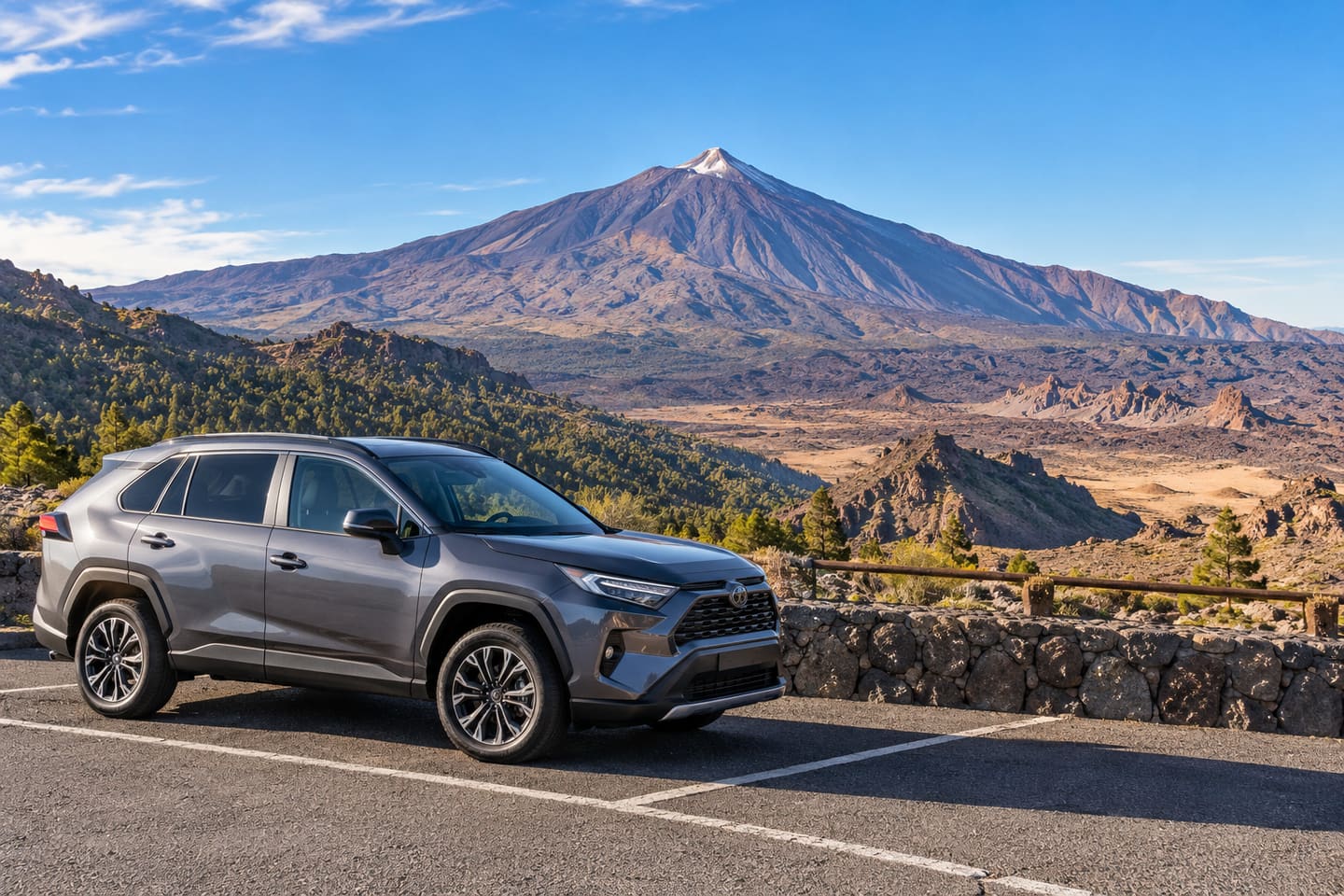
A car lets you arrange the centre transfer and nearby towns yourself. Compare total cost, insurance and parking plans in the Tenerife rental-car guide.
Teide tours
Prefer open volcanic landscapes? Check transport, walking demands and what each ticket includes before booking a Teide excursion.
Sources for your visit
Use the official prices and booking links and operator’s visit rules for practical arrangements. Museos de Tenerife’s geological and biological account explains the wider network; its 2023 visitor-route account and 2026 anniversary article provide further context. Recheck your booking instructions for the day you travel.