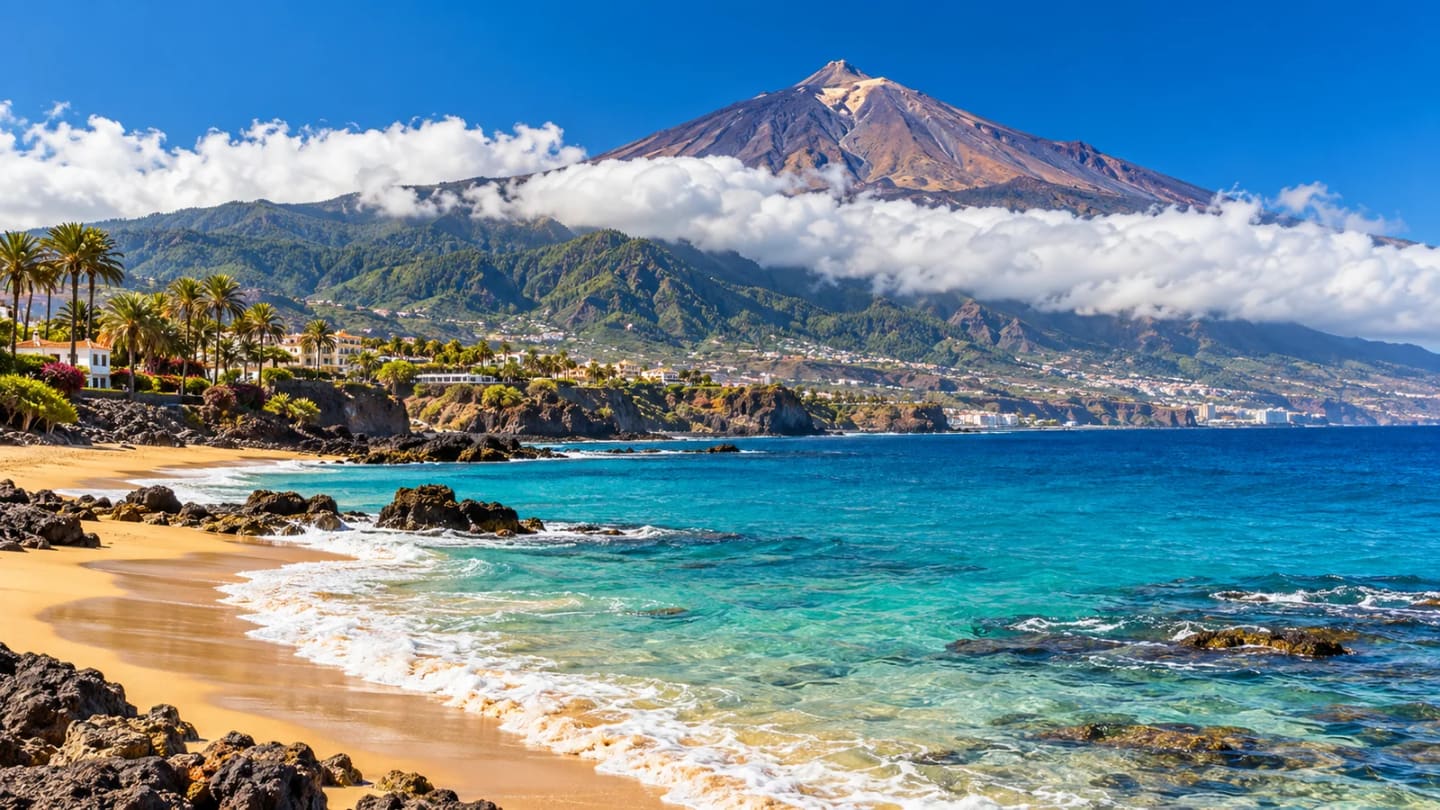
Tenerife weather is generally warmer and drier on the southern coast, while the north is greener and more often cloudy. I’d choose the south for a winter beach base and keep mountain outings flexible. The month matters, but your altitude and exposure matter just as much: a sunny hotel terrace tells you little about conditions on Teide.
Written and reviewed by Mihail Schwarz. Sources checked on 30 September 2026. This is a climate guide, not a live forecast.
Why Tenerife has so many microclimates
The phrase “island of eternal spring” works reasonably well for a coastal holiday. It becomes less useful when packing for a mountain walk. Tenerife rises sharply from the Atlantic to Mount Teide, roughly 3,700 metres above the sea, with slopes facing different directions. A single island-wide temperature cannot describe that range of settings.
The northeast trade winds, or alisios, carry moist ocean air towards the island. As that air meets rising ground, it cools and cloud forms along the windward slopes. A temperature inversion can cap that cloud layer, leaving higher ground clear above it. This is the mar de nubes, the sea of clouds, rather than evidence that the whole island is having a rainy day. Tenerife Tourism explains the trade winds and their role in the island’s climate.
The surrounding Atlantic moderates coastal temperatures, with the relatively cool Canary Current contributing to that setting. The sea changes temperature more slowly than the land. That helps explain why an autumn swim can feel more inviting than a spring swim even when both afternoons look equally sunny.
Altitude adds another layer. A coastal café, a village above the cloud belt and a volcanic plateau are different weather locations. Wind also changes how warm the air feels: sheltered sunshine can be comfortable while an exposed viewpoint demands a jacket. I’d check the destination itself rather than subtract an assumed number of degrees from the hotel forecast.
You will sometimes see an exact count of 28 microclimates. There is no need to organise your trip around that number; the useful distinctions are coast, slope, altitude and exposure. Our Tenerife guide helps put the island’s regions into a workable itinerary. Choose your accommodation for the holiday you actually want, then treat a drive inland as a separate weather decision.
Tenerife south vs north weather: choose your base
For winter sun in Tenerife, the southwest resorts are the easier starting point. Costa Adeje gives you resort beaches and an outdoor holiday routine on the generally drier side of the island. The mountains shelter much of the south from the moisture carried by the prevailing northeast winds. That broad rain-shadow pattern is useful when choosing a base, although passing weather systems can bring rain to either coast.
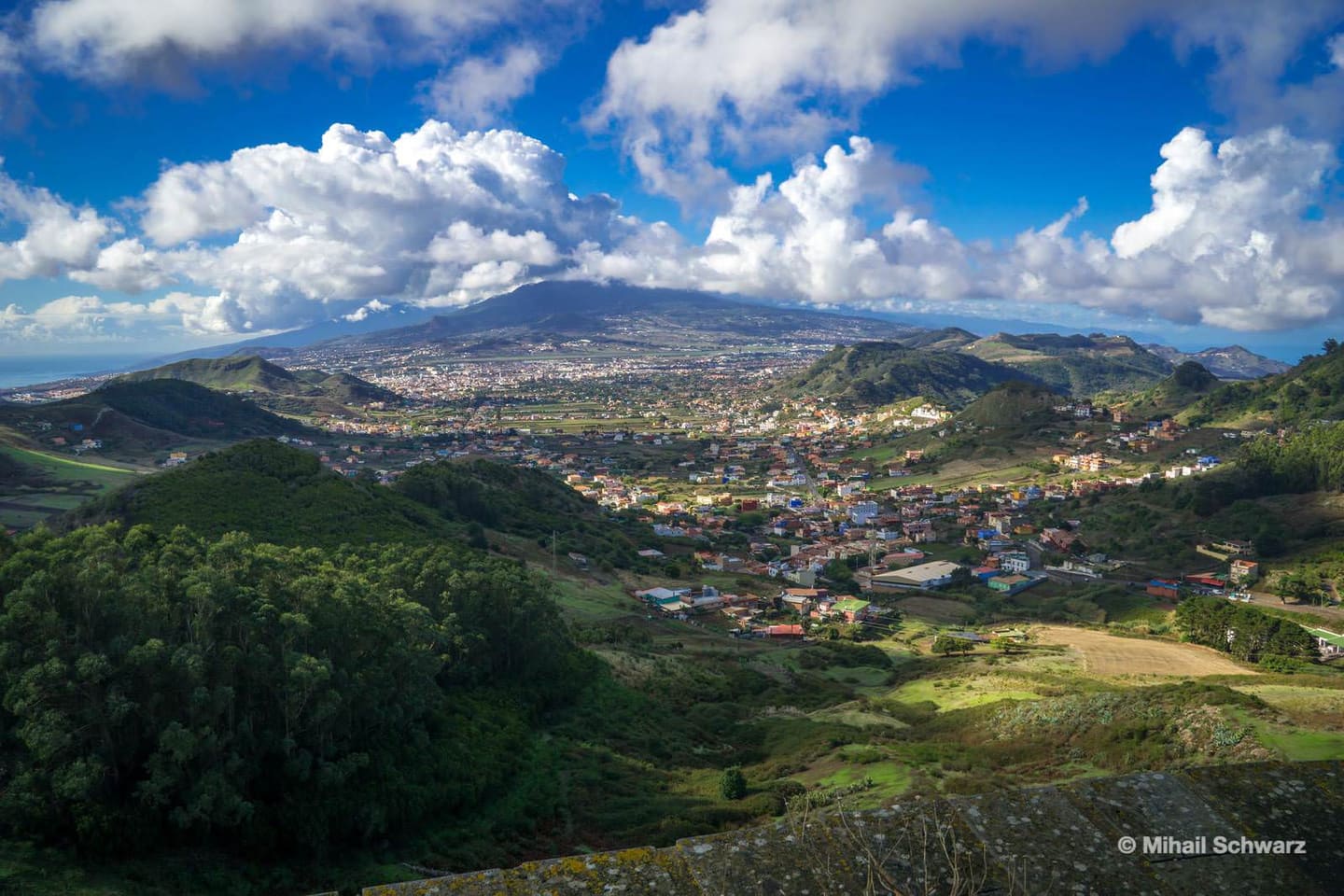
The north receives more moisture and cloud, supporting its greener landscape. Puerto de la Cruz suits a holiday involving gardens, northern towns and a seafront with more of an Atlantic character. I’d choose it for those interests rather than book it as a cheaper version of Costa Adeje and then resent every cloudy afternoon. The official north–south comparison describes the climatic contrast.
North does not mean permanently wet, and south does not mean permanently still. An exposed southeastern beach can be windier than a sheltered southwestern bay. El Médano’s appeal to wind sports is a useful reminder that “southern Tenerife” covers more than one beach setting. Look at your actual beach and accommodation location, especially if sitting outside comfortably is your main priority.
Nor should Tenerife North Airport become your proxy for Puerto de la Cruz. Airport observations are valuable at the station where they are recorded, but elevation and local terrain affect their relevance elsewhere. The same caution applies to the southern airport table below: it gives a transparent reference, not a measurement for every hotel swimming pool.
Tenerife weather by month: temperature, sunshine and rain
The table uses AEMET’s Tenerife Sur Aeropuerto station, C429I, at 64 metres, for the 1981–2010 reference period. High and low mean the average daily maximum and minimum; rain is the average monthly total. Sunshine is hours per month, not daylight hours. These historical normals help compare seasons; they do not forecast your dates or describe today’s climate precisely.
Select a season to narrow the table. With JavaScript disabled, all twelve months remain visible. Expand a month’s planning note for the practical trade-off. Data reproduced with attribution to AEMET’s standard climate values.
| Month | High °C | Low °C | Sun hours/month | Rain mm/month | Planning note |
|---|---|---|---|---|---|
| January | 21.7 | 15.2 | 193 | 17 | January adviceA southern base and a heated pool suit a winter break. |
| February | 22 | 15 | 195 | 20 | February advicePlan short sea swims; keep an evening layer handy. |
| March | 23.1 | 15.6 | 226 | 15 | March adviceGood for mixed sightseeing; sea water remains cool. |
| April | 23.1 | 16 | 219 | 7 | April adviceChoose walks by current trail conditions. |
| May | 23.9 | 17 | 246 | 1 | May adviceCombine early walks with beach afternoons. |
| June | 25.4 | 18.8 | 259 | 0 | June advicePlan shade and drinking water for outdoor days. |
| July | 27.7 | 20.2 | 295 | 0 | July adviceStart exposed activities early and check heat warnings. |
| August | 28.4 | 21.1 | 277 | 1 | August adviceCheck room cooling; leave space for rest indoors. |
| September | 27.9 | 21.1 | 213 | 4 | September adviceConsider a swimming-led holiday with flexible boat dates. |
| October | 26.8 | 20 | 214 | 12 | October adviceKeep beach plans and town visits interchangeable. |
| November | 24.8 | 18.2 | 193 | 26 | November adviceAllow alternatives for wet or windy outings. |
| December | 22.8 | 16.5 | 195 | 30 | December adviceChoose pool heating and leave mountain bookings flexible. |
December to February: winter sun with cool evenings
I’d pick a walkable southern base and a hotel with confirmed pool heating for a winter escape. Sunny spells suit reading outside, promenade walks and beach lunches, but a cool wind changes the experience quickly. Ask whether the pool is heated during your dates rather than relying on a photograph of people swimming. Keep a light layer ready for dinner outside.
Winter also demands more flexibility for the national park. Snow or ice at altitude can disrupt an outing while the coast feels mild. Do not book your only mountain day immediately before flying home. Check the road and activity status, and accept a coastal alternative when conditions make a mountain visit unsuitable.
March to May: good for a mixed walking holiday
Spring suits a week combining towns, short hikes and time on the beach. I’d favour it if walking is the main reason for travelling, with swimming as a bonus. Start with manageable routes and choose shaded stops when the sun feels strong. Sea water can still feel surprisingly cool after a warm lunch on a terrace.
June to August: beach time, shade and early starts
Summer makes beach-based planning straightforward, but exposed walking is another matter. I’d start active days early, carry drinking water and leave time indoors or in shade. Warm evenings are useful for a relaxed meal; they are less useful if your room retains heat and has poor ventilation. Check cooling arrangements when comparing accommodation.
A month with very little average rainfall is not a promise of zero rain, just as a monthly high is not the hottest possible afternoon. Heat episodes require changes to the plan. Follow current warnings rather than deciding that a demanding walk must be safe because Tenerife’s usual summer climate sounds moderate.
September to November: swimming first, then more flexibility
Early autumn is my editorial choice for a trip where swimming matters more than escaping British winter. The ocean has had the summer to warm up, and evenings still suit outdoor meals. Keep boat excursions movable, though: air temperature alone says little about the sea state outside a sheltered harbour.
By later autumn, I’d place more weight on alternative town visits and flexible bookings. Do not fill every morning with a prepaid outdoor activity. A good apartment or hotel with pleasant indoor space earns its keep when one day needs rearranging. Your itinerary should work with one wet afternoon, rather than collapse because every activity depends on blue sky.
Canary Islands sea temperature: can you swim in winter?
You can swim in Tenerife in winter when local conditions allow, but “possible” and “comfortably warm” are different judgements. The island’s tourism material gives a broad seasonal sea-water range of approximately 19–26°C. That is guidance across conditions, not a guaranteed reading at your beach. A short dip may suit you when a long snorkelling session does not.
For a more detailed seasonal guide, Climates to Travel’s Tenerife compilation places the coolest water around February–March, roughly 19°C, and the warmer period around August–October, approximately 23–24°C. These rounded figures explain the seasonal lag; check current local readings if water temperature determines your plans. They should not be treated as exact forecasts or universal Canary Islands sea temperatures.
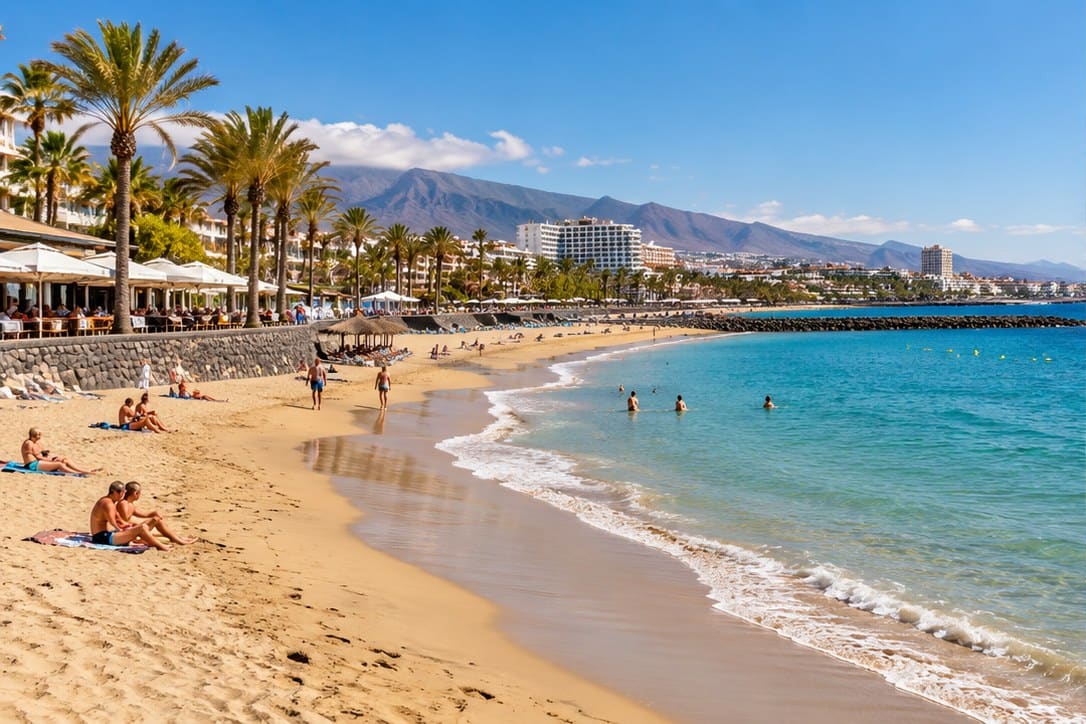
I’d choose a sheltered southern resort beach for a straightforward winter swim, then assess the water on arrival. Las Vistas and the Costa Adeje beaches offer practical facilities; shelter does not eliminate currents or breaking waves. Compare access, services and exposure in our Tenerife best beaches guide before deciding where to spend the day.
Pay attention to flags and lifeguard advice, including on an otherwise sunny morning. A warm-looking bay can still be unsuitable for entering the water. If the sea is rough, a walk on the promenade and a heated pool are better alternatives than searching for an unguarded spot where nobody will stop you.
For snorkelling or a boat swim stop, ask about equipment, conditions and cancellation arrangements. A wetsuit can make a longer session more comfortable, but cannot make poor sea conditions appropriate. Children and less confident swimmers need plans that suit them individually. I’d keep the first swim short and stay close to an easy exit rather than make a long offshore swim the test of whether the holiday is warm enough.
Calima in Tenerife: Saharan dust and a changed plan
Calima is airborne dust transported from the Sahara towards the Canary Islands. It can dull distant views and give the sky a warm haze; some episodes also coincide with unusually hot conditions. You do not need a dramatic orange sky for air quality to matter. Check the warnings and air-quality information rather than judging the episode by its photographic appeal.
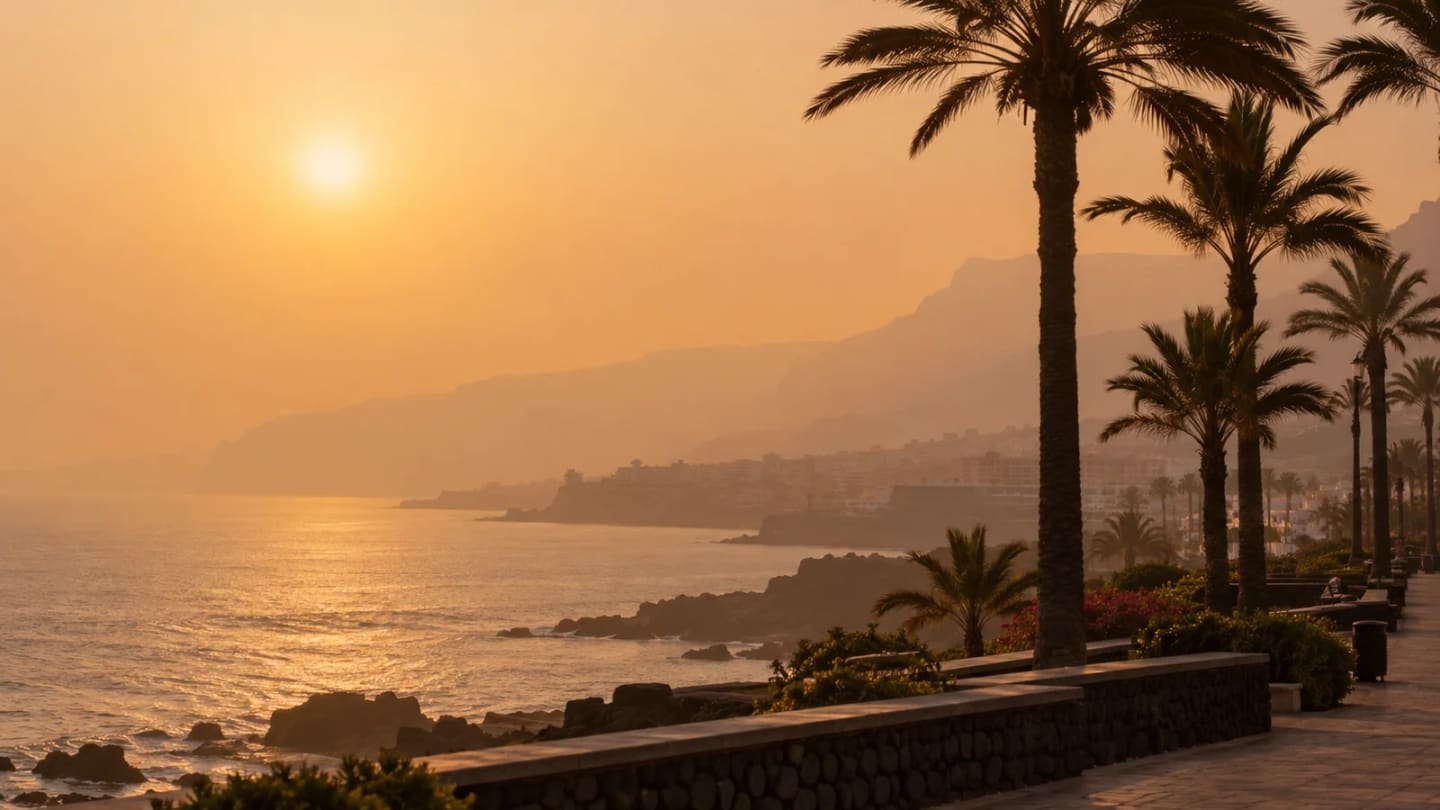
An episode can last several days, and its intensity can change during that time. I would not plan around a promise that it always clears after two or three days. AEMET’s December 2024 Canary Islands report, for example, records a dust episode extending over multiple days. Use the current forecast to decide when to rearrange your outing.
The Canary Islands Government’s health advice recommends limiting outdoor exposure and exertion, keeping windows closed and staying hydrated during affected conditions. Children, older people and people with existing respiratory or cardiovascular conditions are among the groups needing particular care. Follow your usual medical advice and seek help if symptoms worsen; serious breathing difficulties warrant calling 112.
For a holiday, the useful response is to reduce outdoor exertion and choose suitable indoor time. Postpone an exposed hike rather than substituting an equally strenuous route elsewhere. Check with the operator before a stargazing trip: dusty air can compromise the very visibility you are paying for. Do not assume a boat journey escapes the dust simply because it leaves land.
What to wear: layers from beach to Teide
For the coast, bring light clothing, comfortable sandals or walking shoes, a sun hat and sun protection. Add a light jumper or jacket for evenings and windy promenades. A beach bag with drinking water, shade and a change of clothes is more useful than assuming you can return to the hotel immediately whenever the weather shifts.
For northern towns and forest walks, add a waterproof outer layer and shoes suited to the route. A path under trees can be damp even when your southern accommodation was dry. Keep the spare layer accessible rather than buried beneath beach things in the boot. Decide where you will turn back if conditions deteriorate.
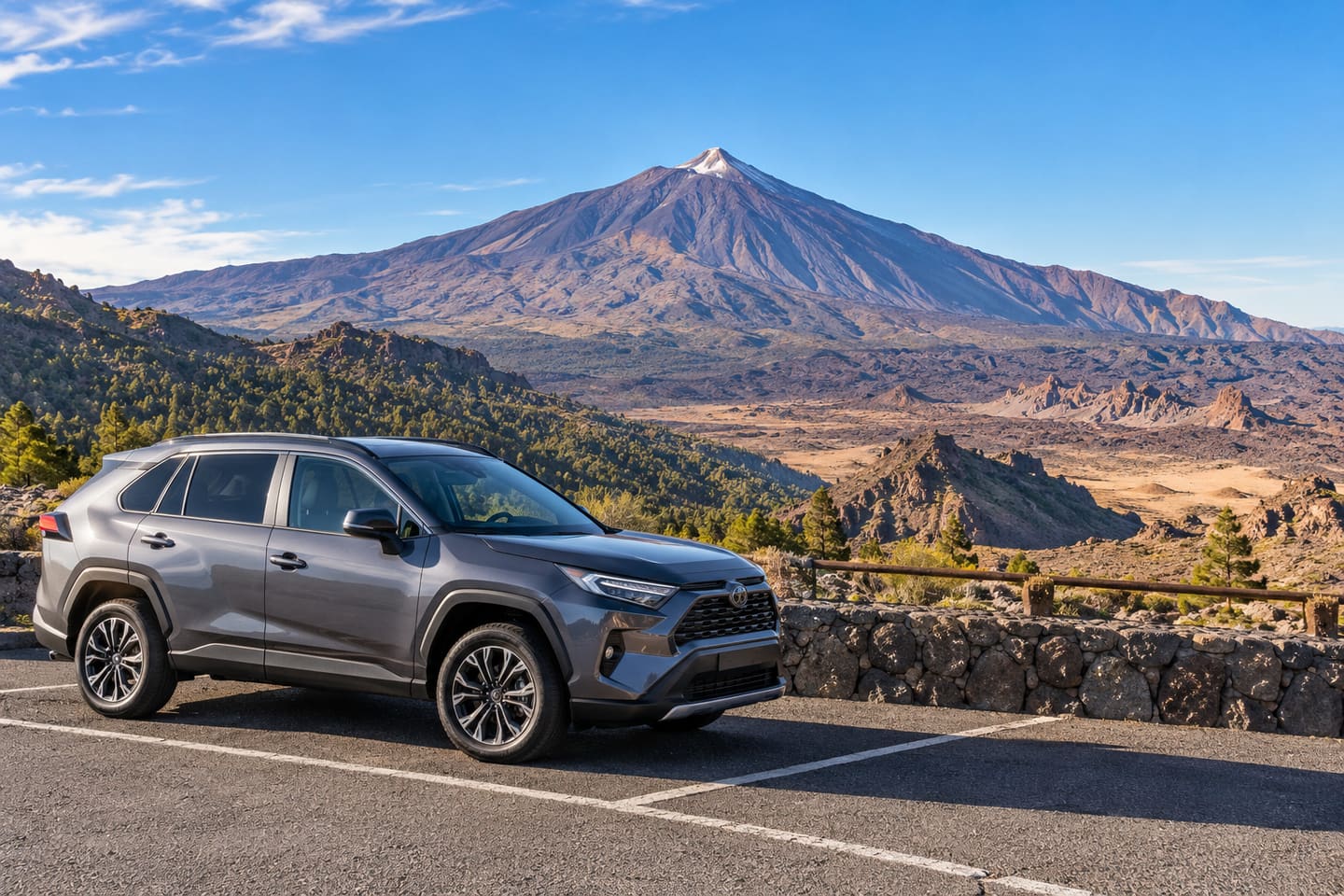
For Teide, take warm layers, a wind-resistant outer jacket, closed shoes and extra warmth for your hands and head when conditions call for it. A high-altitude outing is a separate packing job. A short daylight viewpoint visit also differs from standing beside a telescope after sunset. I’d carry the warmer clothing even when the coastal forecast makes it look unnecessary.
Stargazing means spending time relatively still as the air cools. Tenerife Tourism’s astronomy guidance specifically advises warm clothing for higher areas. Ask the organiser about the meeting altitude, expected conditions and equipment, and confirm whether a warm layer is supplied rather than assuming it is included.
Before leaving, check AEMET forecasts and warnings, official road or trail notices and your operator’s status. A sunny valley does not confirm an open mountain road or running cable car. Pack for the highest and latest part of the day, then choose a simpler outing if the conditions exceed your preparation.
Choose an outing that fits the weather
Teide astronomy tour
For a clear mountain evening. Compare meeting points, warm clothing and the remedy if cloud or wind prevents observing.
Boat trips
Choose by departure harbour and vessel format. Check the marine forecast and cancellation terms, even on a sunny resort day.
Car hire
Useful for changing a sightseeing plan. Compare parking and the actual days you need a vehicle before paying for a full week.
Questions before you book
Which month suits a Tenerife holiday?
I’d choose early autumn for a swimming-led trip, spring for a mixed walking holiday and a southern base for winter sun. Your preferred activity matters more than finding one supposedly perfect month.
Does a cloud symbol mean the whole island is cloudy?
No. Check which location and altitude the forecast represents. Compare your destination’s forecast before changing plans, and use mountain, marine and municipal information for the relevant outing.
Is the north a bad choice in winter?
It is a less straightforward choice if uninterrupted beach sun is your only priority. Choose it for northern sightseeing and greenery, bring a rain layer and give your itinerary indoor alternatives.
Sources checked
Climate figures: AEMET Tenerife South Airport, 1981–2010 normals. Climate explanation and activity preparation: Tenerife Tourism. Calima precautions: Canary Islands Government. Sea-temperature context: the tourism activity booklet and Climates to Travel, a secondary compilation. Checked on 30 September 2026; consult current forecasts and operator notices for your travel dates.