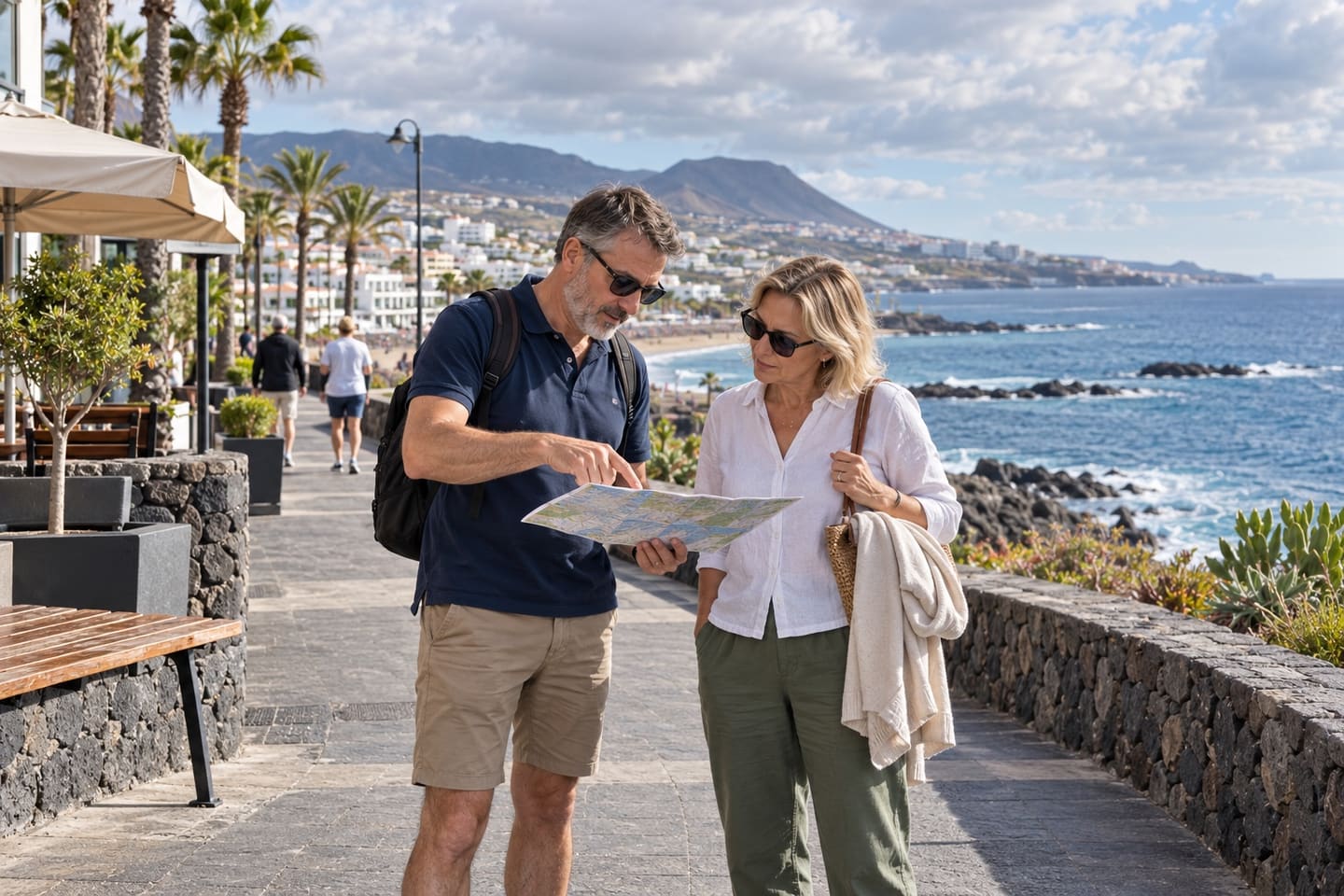
A coastal walk can share the day with a more flexible sightseeing plan.
December can suit a Tenerife holiday combining coastal days with flexible sightseeing. The useful question is whether you want time outdoors with a choice of activities, or a guaranteed hot beach holiday. The island’s winter climate gives you a starting point, but it cannot tell you the weather on your particular dates or how the sea will feel.
Tenerife South climate normals describe one low-altitude station, while mountain plans need separate conditions, clothing and access checks. Treat the coast, the wetter north and Teide as different parts of the same trip. Keep a second plan for any day when wind, cloud or access changes what you can do.
Is December a good time for your Tenerife trip?
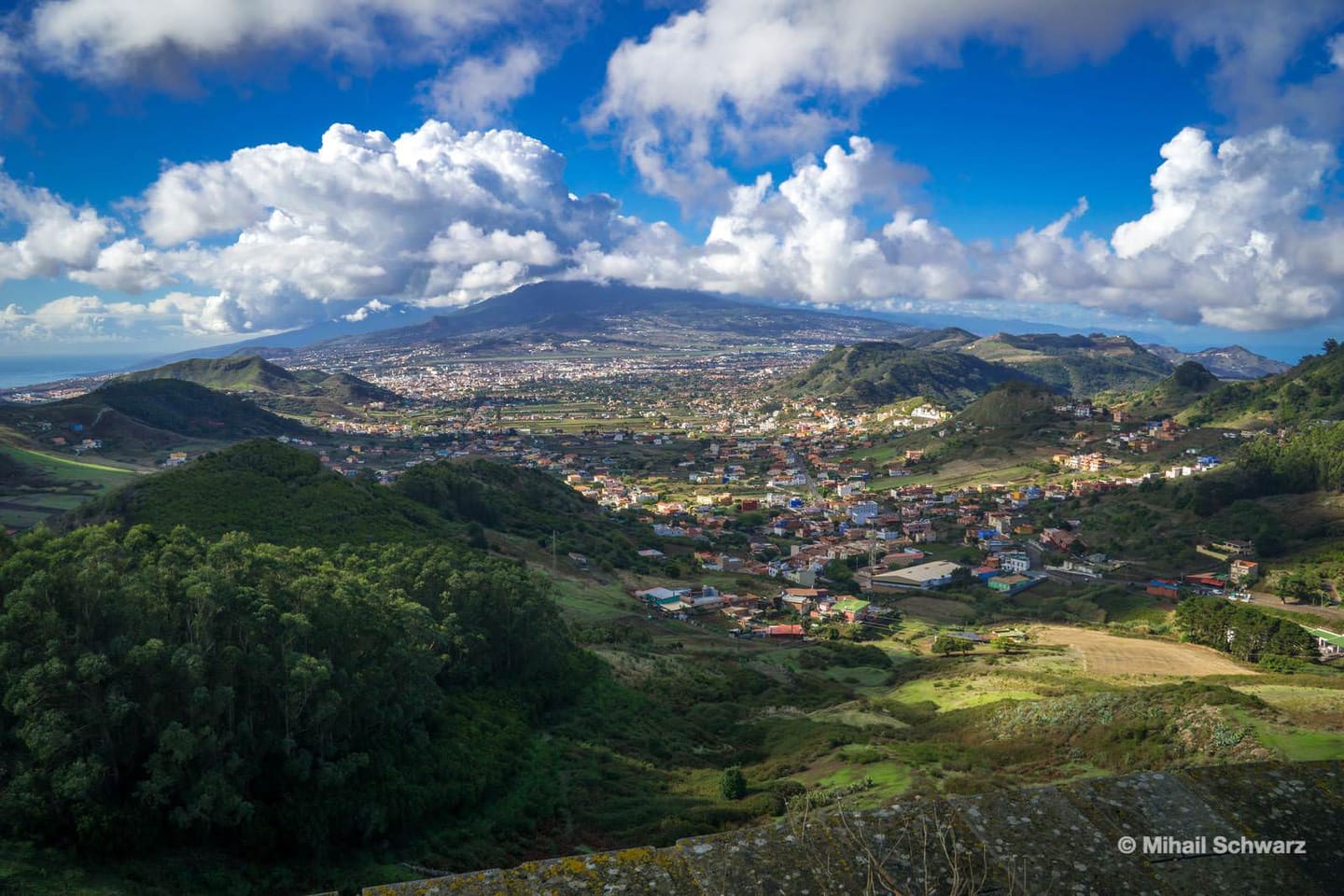
December works best when the holiday is about a mix of coastal walks, sightseeing and optional beach time. Tenerife’s tourism office describes a generally drier south and a wetter, cloudier north. That contrast can help you choose a base, but it does not mean every southern day is sunny or every northern day is wet. Decide where you want to spend most of your time, then leave room to change plans.
For a numerical reference, AEMET’s Tenerife Sur Aeropuerto station sits at 64 m and reports climate normals for 1981–2010. Those historical averages describe that station, not all Tenerife resorts, the sea or the summit of Teide. Check a forecast for your dates closer to departure, especially if a particular outdoor activity matters to your trip.
Who should choose another kind of holiday?
If you need consistently hot air, warm sea swimming every day or a fixed mountain itinerary, December carries more uncertainty than that kind of holiday allows. A south-coast base can make coastal time easier to prioritise, but it cannot remove wind or poor conditions. Choose accommodation and activities that you would still enjoy if a beach or cable-car day has to move.
December weather: compare the correct locations
AEMET’s December normals for Tenerife Sur Aeropuerto (C429I) give a mean temperature of 19.7°C, a mean of daily maximum temperatures of 22.8°C, a mean of daily minimum temperatures of 16.5°C and mean monthly precipitation of 30 mm. These are historical station figures for 1981–2010. The 22.8°C figure is not a promised afternoon temperature, and 30 mm is not a forecast for your travel week.
The island’s relief and trade winds help explain why local conditions differ. The tourism office describes more cloud and moisture in the north and generally drier, sunnier conditions in the south. Cloud cover, rainfall and sunshine can change as you move around the island, and a coast-level average is a poor guide to the mountain. Choose a base for the places you plan to use, rather than treating one island-wide temperature as your itinerary.
Climate averages versus your travel dates
Use the normals to set expectations before booking. Use the AEMET forecast and warnings for your actual dates when the trip approaches, then check the location of each activity. A day suitable for a sheltered coastal walk may still be unsuitable for an exposed route or a cable-car visit. Make the decision again on the day if conditions change.
Can you swim and spend time on the beach?
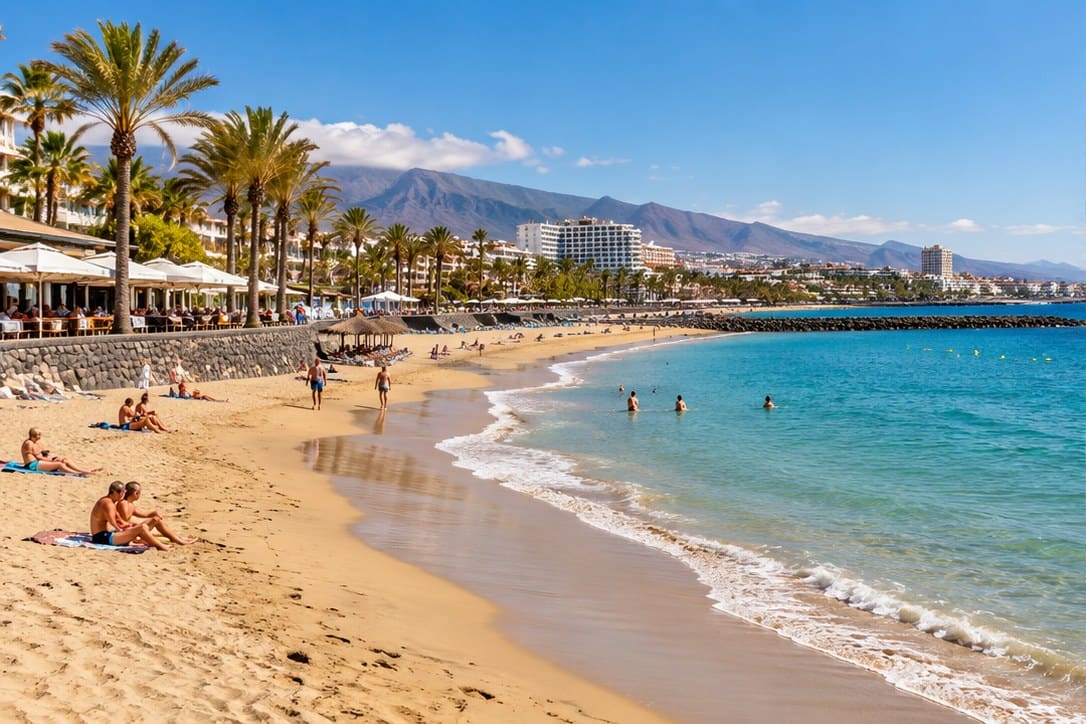
You may find a pleasant beach day in December, but swimming is a day-by-day choice. Air temperature at an airport station is not sea temperature. Wind, waves, local flags and your own comfort matter more than a monthly air average when you decide whether to enter the water. Follow the instructions displayed at the beach, and keep a dry-land activity available if conditions are poor.
If swimming is central to the holiday, check the exact facilities in your accommodation booking. A heated pool should be confirmed for the property and dates you choose; it is not a feature of every hotel. Avoid planning around a precise sea-temperature or UV figure without a source for the location and period. Bring sun protection for outdoor time and adjust it to the conditions you actually meet.
Choose a sheltered plan, then check the day
Pick a beach for its access, facilities and exposure, then judge the water when you arrive. Choose a Tenerife beach by the type of visit you want, rather than assuming the same sea conditions everywhere. If the water does not appeal, a promenade walk, a town visit or a flexible inland stop can still make good use of the day.
Teide, excursions and shorter daylight
Teide needs its own weather decision. The tourism office notes that snow can occur in the mountain area in winter while coastal conditions differ; that does not promise snow on your dates. The Teide cable-car operator says its facilities may stop operating in adverse weather. Keep the mountain day movable and check the operator’s current status before travelling up.
A cable-car ticket takes you to the upper station; access to the summit trail requires a separate permit from the relevant authority. Other trails can also close. Confirm the route, permit and operating conditions for your party before booking, and allow time for travel and daylight rather than packing several distant stops into one day. If the cable car cannot run, use the spare day or a coastal plan instead.
Plan an excursion that can move
For any water activity or mountain excursion, read the provider’s weather policy and cancellation terms for your actual booking. Put the activity you most care about early enough in the trip that another day remains available. Plan a Teide cable car visit as a separate decision from a beach day; the clothing, access and conditions are different.
Packing, booking and seasonal plans
Pack for the places on your itinerary rather than one average temperature. A light layer and practical walking shoes can serve a coastal day; a higher-altitude outing calls for warmer layers and a fresh conditions check. Include sun protection and a layer for cooler or windier periods. The aim is flexibility, not a claim that one outfit will suit every part of Tenerife.
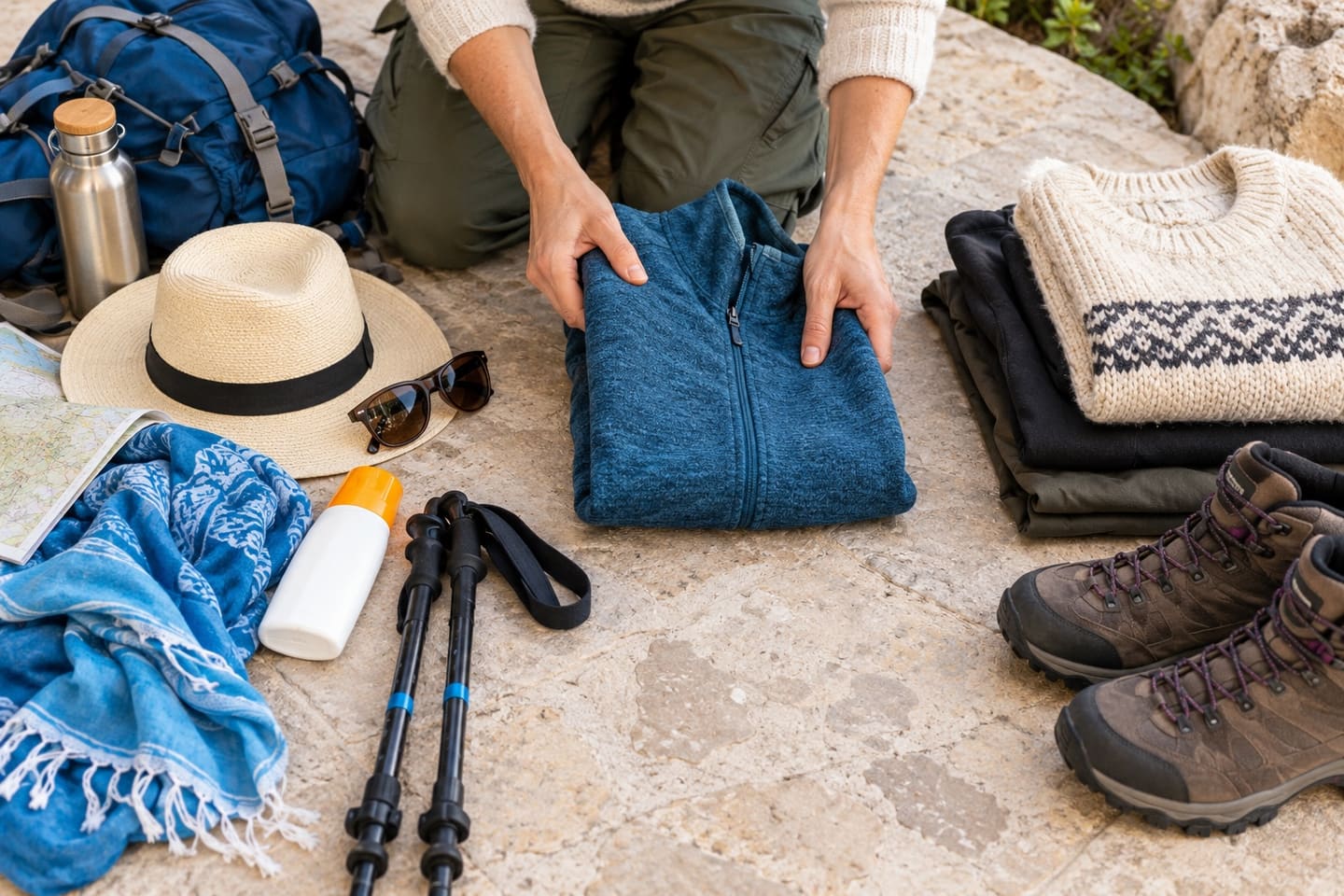
Pack for the places you plan to visit, not only the beach.
If you travel around Christmas, check the current official announcements and the terms of each booking before fixing a day-by-day schedule. Opening hours, events and transport can vary by date; an old December programme is a poor basis for a new trip. Reserve activities that matter to you with enough flexibility to move them, and keep meal and travel arrangements clear for the dates you select.
For a broader route, plan your Tenerife trip around the parts of the island you most want to see. Then add a second option for days when the coast, mountain or sea conditions change.
Before you book a December stay
Check the property’s actual room heating, pool temperature policy, meal arrangements and any holiday supplements in your chosen rate. If you expect to travel without a car, check how you will reach the activities on your list. These are booking-specific details; a favourable climate average cannot answer them for an individual hotel or excursion.
Frequently asked questions
Is Tenerife warm enough in December?
It can be suitable for outdoor days, depending on your expectations and the actual weather. At Tenerife Sur Aeropuerto, AEMET’s 1981–2010 December normals are 19.7°C for the mean, 22.8°C for the mean daily maximum and 16.5°C for the mean daily minimum. Those figures describe one low-altitude station, not a forecast for the whole island.
Can you swim in the sea in December?
Swimming is possible when the local sea conditions and your comfort allow it. The December air-temperature normal does not measure the sea. Check beach flags and conditions on the day, and make another plan if wind, waves or water temperature make swimming unappealing.
Does Teide always have snow in December?
No. Snow can occur in Tenerife’s higher areas in winter, but the climate description cannot predict a particular December day. Check current mountain conditions and access before setting out. Cable-car operation and trail access also depend on conditions and the relevant operator or authority.
Before you book or set out
Use the Tenerife South climate figures as a planning reference, then test your plans against the forecast for each location. Choose a base that fits your priorities, keep a beach or town alternative for a mountain day, and confirm access before travelling. If your trip spans several areas, plan a Tenerife trip can help put December into a wider context.